

|
型号 |
GB/T 7332 (IEC 60384-2) | 0.001~47.0uF |
| 100/160/250/450/630/1000V | ||
|
功能 |
Metallized polypropylene film, non-inductive wound construction. | |
| Wide capacitance range, good self-healing properties,long life; | ||
| Flame retardant plastic case and epoxy resin sealing (UL94/V0). | ||
|
应用 |
Used in DC impulse and pulse circuits. | |
| Used in SMPS converter, electronic ballasts, compact flourescent lamps. | ||
| Used in by-passing, blocking, coupling, decoupling, logic,timing and oscillator circuits. | ||
These capacitors are widely used in a variety of applications due to their versatility and superior performance. In power electronics, they are an integral component for smoothing, coupling, and filtering, ensuring stable power delivery in a variety of circuits.
In the lighting industry, they contribute to power factor correction and circuit stability in lighting fixtures, thereby improving energy efficiency and reliability.
In automotive electronics, they facilitate key functions such as engine control units, audio systems, and lighting circuits, thereby improving vehicle performance and safety.
Also critical in telecommunications equipment, industrial automation systems, and consumer electronics, they ensure reliable operation and optimal performance.
Encapsulated metallized polyester film capacitors have unparalleled characteristics and diverse applications, making them an essential component in modern electrical systems, driving innovation and efficiency in multiple fields.
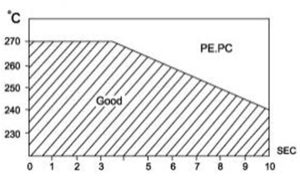 |
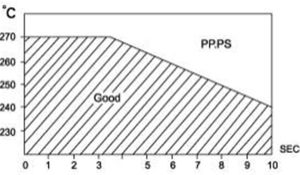 |
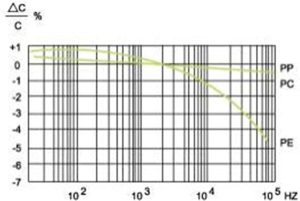 Capacity change rate vs. Temperature Capacity change rate vs. Temperature |
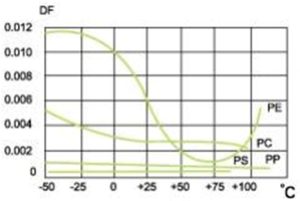 Loss angle tangent vs. Temperature Loss angle tangent vs. Temperature |
|
Capacity rate of change vs. Frequency |
Loss Angle Tangent vs. Frequency |
 English
  Chinese